
'With continued focus on votes, upcoming by-polls and purchasing politicians, the political hierarchy has little time for national defence.' 'They would do well to heed a veteran scholar, who says, "There will be war with China in the next few years. The next full scale war will have the involvement of Pakistan and terror elements, insurgents and intelligence assets operating inside India",' warns Lieutenant General Prakash Katoch (retd).

The Ministry of External Affairs (MEA) has announced that India and China have reached an understanding to resume the Kailash Mansarovar Yatra in 2025. While an understanding has been reached, the modalities of the pilgrimage are yet to be firmed up. The Yatra has been suspended since 2020 due to the COVID-19 outbreak and non-renewal of Yatra arrangements by the Chinese side.

In his conversation with Prime Minister Narendra Modi, President Xi Jinping stressed that improving China-India relations serves common interests and is conducive to peace and stability of the region and the world.
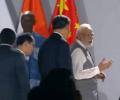
Prime Minister Narendra Modi conveyed to Chinese President Xi Jinping India's concerns on the "unresolved" issues along Line of Actual Control (LAC) in eastern Ladakh during a conversation on the sidelines of the BRICS summit, Foreign Secretary Vinay Mohan Kwatra said on Thursday.

Asked about the recent meeting between Modi and Xi, and if Russia had any role in it, Alipov said, "We have not played any role in it, but we are happy that it took place in Kazan... We wholeheartedly welcome the meeting."

'A less tense US-China relationship would make Beijing less likely to provoke India -- including on the border -- in retaliation for its close defence ties with the US.'

US strikes on Iran's three main nuclear facilities have once again raised concerns that Tehran might shut down the Strait of Hormuz - one of the world's most critical chokepoints, through which a fifth of global oil and gas supply flows.

'The future of BRICS is under stress as Chinese attempts to expand the platform are being resisted by India and Brazil.' 'Beijing is focused on a quick expansion with the aim of giving the platform a distinctly anti-Western orientation, which New Delhi and Brasilia seem to have no interest in,' notes Harsh V Pant.

'We should carefully handle issues concerning each other's core interests. We should properly manage and control problems that cannot be solved for the time being'
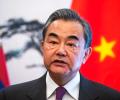
Addressing a symposium on the international situation and China's foreign relations in 2022, Wang said both countries have maintained communication through diplomatic and military-to-military channels.
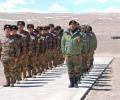
The Working Mechanism for Consultation and Coordination on India-China Border Affairs (WMCC) was established in 2012 as an institutional mechanism for consultation and coordination for the maintenance of peace and tranquillity in the border areas.

'It is typical of China's strategic deception of making virtue out of necessity,' observes Rup Narayan Das.
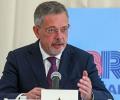
Amidst ongoing efforts to resolve the Russia-Ukraine conflict, Russian Ambassador to India Denis Alipov stated that Moscow is "prepared to sit in a trilateral format" for peace talks. Alipov also expressed optimism about the current US administration's approach to the conflict, suggesting a willingness to engage in dialogue. He highlighted the importance of a peaceful resolution while emphasizing that Russia is prepared to continue the war if necessary. Alipov stated that Russia does not expect anything specific from India in terms of mediation and highlighted the strong bilateral relationship between the two countries.
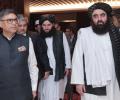
India's Foreign Secretary Vikram Misri has arrived in Beijing for a two-day visit during which he will hold talks with Chinese officials. The visit comes amid ongoing efforts to de-escalate tensions along the Line of Actual Control (LAC) in eastern Ladakh and to resume bilateral cooperation in various fields, including the Kailash Mansarovar Yatra.

After the 1962 War with China, there was a demand to forge greater defence cooperation between India and the West. One such voice was that of Sudhir Ghosh, a distinguished MP, to tie up strategic cooperation with the USA immediately after the Chinese attack on India, recalls Rup Narayan Das.
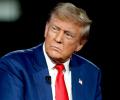
A leading expert predicts that the incoming Trump administration will likely continue its pro-India policies, including the Indo-Pacific strategy and Quad, but highlights potential challenges such as trade disagreements, immigration issues, and a possible quid pro quo for technology sharing. The expert also notes that the Trump 2.0 administration may prioritize great power politics over strategic altruism, potentially impacting human rights and religious freedom concerns.
'Don't play the American game... India is too big for a US game.'

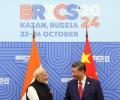
In their first structured bilateral talks in nearly five years, Prime Minister Narendra Modi and Chinese President Xi Jinping Wednesday agreed that India and China can have a 'peaceful and stable' relationship by displaying maturity and mutual respect and endorsed the pact on the resolution of the dragging eastern Ladakh border row.
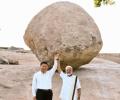
'My understanding is that by the time President Xi Jinping came for the Chennai summit [2019], he had already instructed his army to undertake the action in Galwan in the summer of 2020.'
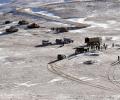
The MEA said the two sides agreed to continue discussions through diplomatic and military channels to resolve the remaining issues "at the earliest" so as to create conditions for the restoration of normalcy in the bilateral relations.

Jaishankar said, "The immediate part which awaits us is what we call the de-escalation, which is the build-up of forces along the Line of Actual Control."
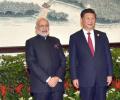
Prime Minister Narendra Modi and Chinese President Xi Jinping have agreed to make efforts to put India-China ties in the "right direction" and to "respect and accommodate" each other's concerns to avoid "impedance" relations, a top Chinese diplomat said on Tuesday.
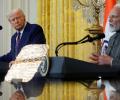
'It showed me that this man had courage. He makes his own decisions, but he also trusted me enough in that moment to walk with me into the crowd,' Modi tells Lex Fridman on his podcast.

Playing down recent border stand off in Ladakh ahead of Premier Li Keqiang's visit to India, China on Thursday said the two sides have the ability to prevent such issues from affecting overall growth of ties, while working "very hard" to find a solution at an "early date".

Prime Minister Modi and President Xi held the conversation on Wednesday on the sidelines of the BRICS (Brazil, Russia, India, China, South Africa) summit in Johannesburg.

Chinese Foreign Minister Qin Gang will travel to India to attend the Shanghai Cooperation Organisation (SCO) foreign ministers' meeting being held in Goa on May 4 and 5, the foreign ministry in Beijing announced on Tuesday.
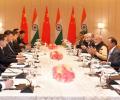
China had been trying hard to enter the Indian market, without opening its own to Indian products. There is an economic crisis in India-China relations that the Chennai Connect barely scratched the surface, points out Srikanth Kondapalli.

In the document, Russia underlined that it will build on a privileged strategic partnership with India with a view to enhance and expand cooperation in all areas on a mutually beneficial basis.

India and China have implemented a pact on patrolling in Depsang and Demchok along the Line of Actual Control (LAC) in eastern Ladakh, as per agreed modalities and timelines. The agreement was reached on October 21 and includes provisions for disengagement and patrolling in the last two friction points in the region. The pact has been effected and implemented as agreed, with both sides resuming patrolling activities and grazing, where applicable, as per longstanding practice before the friction began. The terms of the disengagement agreements reached prior to the latest pact continue to hold in relevant areas in eastern Ladakh. The agreement applies mutually to both sides and is without prejudice to India's positions on the LAC or boundary lines. India and China are each carrying out one round of patrolling in Depsang and Demchok, but they have maintained their deployment of troops along the LAC. The focus now is on de-escalation of the overall situation. The agreement was endorsed by Prime Minister Narendra Modi and Chinese President Xi Jinping in a meeting in Kazan, Russia, signaling attempts to normalize ties.

India has not yet received any confirmation on Chinese President Xi Jinping's in-person participation at the upcoming G20 summit, people familiar with the matter said on Thursday amid reports that he is likely skip the conclave.

Modi is visiting the African country from August 22 to 24 at the invitation of South African President Cyril Ramaphosa. South Africa is hosting the first in-person summit of BRICS comprising Brazil, Russia, India, China, and South Africa, since 2019.

China's Defence Ministry says the militaries of China and India are making "great progress" in implementing the disengagement agreement to end over four-year-long standoff in eastern Ladakh. Spokesman Sr Col Wu Qian said Defence Minister Rajnath Singh and his Chinese counterpart Admiral Dong Jun had a positive meeting in Vientiane, Laos, last week, and the two sides are implementing the settlement reached between the two counties. The two ministers agreed to implement the important consensus reached between the top leaders and promote stable relations between the two countries, the spokesman said.

During a weekly press briefing, the Foreign Office Spokesperson Mumtaz Zahra Baloch said that invitations have been sent to the heads of countries to participate in the meeting which will take place on October 15-16, the Dawn newspaper reported.
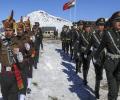
India and China held two days of military talks in an "open and constructive manner" for an early and mutually acceptable resolution of the remaining issues along the Line of Actual Control in eastern Ladakh and agreed to maintain peace on the ground.

On Pakistan, the publication quoted him as saying that India wants "normal and neighborly relations."

The Summit will take bilateral relations to a higher level and have a major and positive impact on regional and world peace, stability and development, Sun said.

Prime Minister Narendra Modi and Chinese President Xi Jinping will hold bilateral talks on Wednesday on the margins of the Brazil, Russia, India, China, South Africa (BRICS) summit in Russia, in their first structured meeting since the eastern Ladakh border row erupted in May 2020.

Notwithstanding their differences on the boundary question, India and China on Wednesday vowed to deepen their multi-faceted ties for a "lasting friendship" as Union External Affairs Minister S M Krishna met his Chinese counterpart Yang Jiechi in Phuket.

India and China on Monday decided to deepen their economic ties, cooperate on civil nuclear energy programme and enhance military interactions besides working together at various international forums.
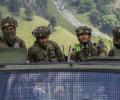
Two days after the India-China military talks, the joint statement, issued in New Delhi by the Indian Army said both sides had a 'candid and in-depth exchange' relating to disengagement along the Line of Actual Control (LAC) in the Western Sector of India-China border areas.
